The trail class is judged on the performance of the horse over obstacles, with emphasis on manners, response to the rider, and quality of movement.
Class Requirements
- Horses must not be required to work on the rail.
- Horses must work all three gaits (walk, jog, lope).
- Western and English may show together, depending on show regulations.
Trail Course
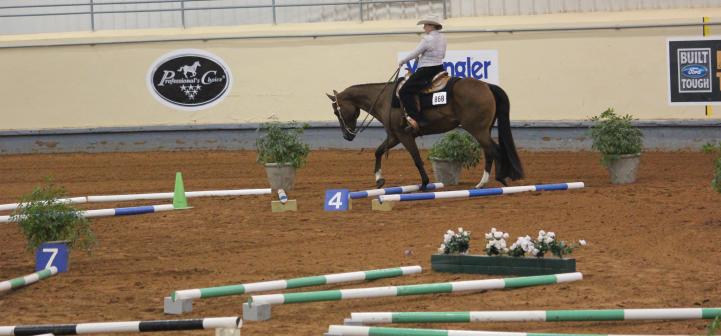
The course contains six to 10 obstacles, including mandatory and optional obstacles. Mandatory obstacles include opening, passing through, and closing a gate, riding over at least four logs or poles, and a backing obstacle. Optional obstacles include water hazard, walk or job serpentine, carrying an object, riding over a wooden bridge, putting on and removing a slicker, opening a mailbox, and side pass. Obstacles may not include tires, animals, hides, PVC pipe, ground ties, and jumps.
The judge must walk the course to make sure it is safe, logical, workable, and meets requirements. Any adjustments can be made at this time.
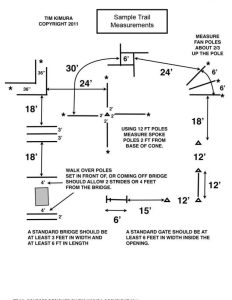
Sample Patterns with Measurements

Scoring
Before scoring a trail class, the judge should be familiar with each association’s rules and regulations as they may differ from one another. Most associations use a scoring system where scores range from o to infinity, with 70 being an average score.
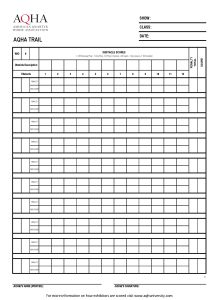
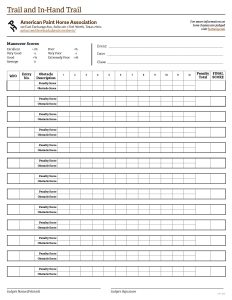
Maneuver Score
Each maneuver indicated in the pattern receives a maneuver score of +1 1/2 to -1 1/2 in half point increments and 0 indicating an average maneuver. The following are the general guidelines used to determine appropriate maneuver scores:
+1 1/2 Excellent
+1 Very Good
+1/2 Good
0 Average/Correct
-1/2 Poor
-1 Very Poor
-1 1/2 Extremely Poor
Penalties
- Common penalty points included 1/2, 1, 3 and 5
- Exhibitors may also receive a 0 score. These are general reserved for instances such as breaking the pattern or abuse of the animal.
- Judges and exhibitors should refer to the desired association specific guidelines, rules, patterns and score sheets for the most accurate information.
Credits
- Negotiate the obstacles with style and some degree of speed, provided correctness is not sacrificed
- Show attentiveness to the obstacles
- Display high quality of movement and cadence
- Capability of picking their own way through the course when obstacles warrant it
- Willingly respond to rider’s cues
Resources
- AQHA Rulebook
- APHA Rulebook
- Judging Trail
- AQHA and APHA Scoresheets